
Small, colorful, and impossible to miss. Poison dart frogs are among the rainforest’s most fascinating inhabitants. Although they rarely grow to be more than a few centimeters long, they have become famous around the world for their vivid colors and their toxic defense mechanism.
Nature's Warning Signs
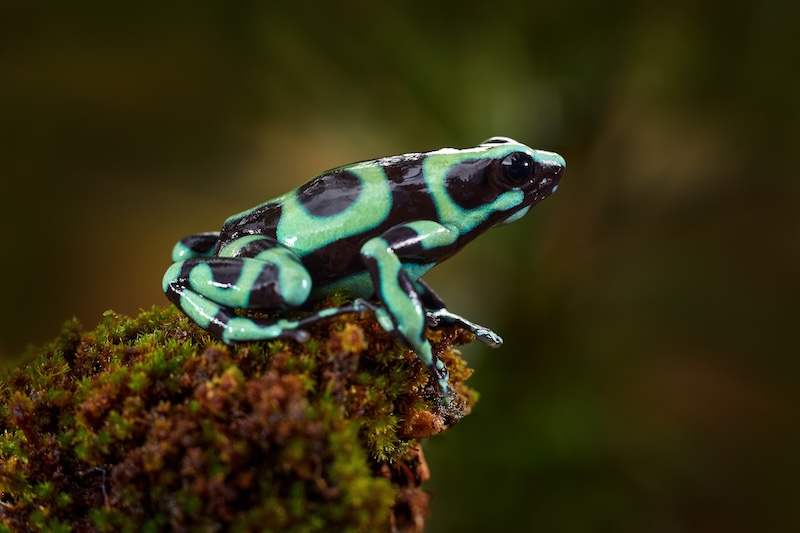
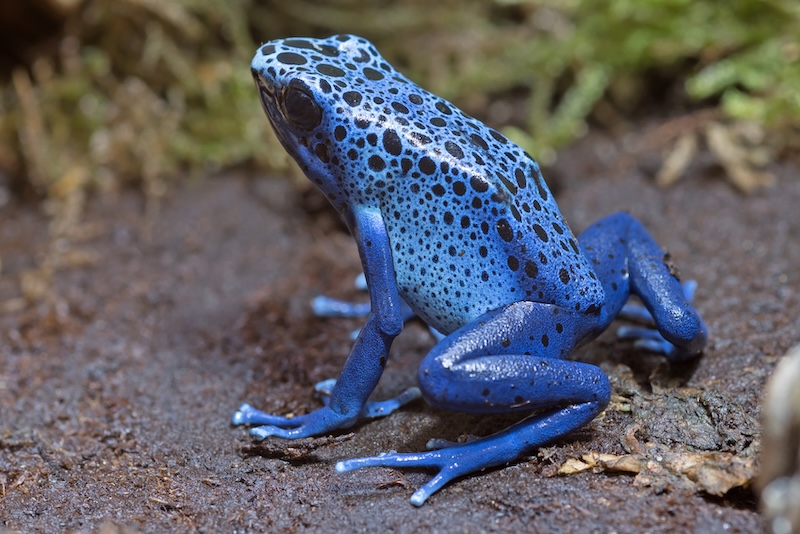
In nature, bright colors are rarely a coincidence. The vibrant colors of poison dart frogs serve as a clear signal to predators: “Don’t eat me!”
This type of color signal is called a warning color and helps the frogs protect themselves from being eaten. Over time, predators learn that the brightly colored frogs are not suitable prey and avoid them. In this way, the colors become an effective defense mechanism that helps the frogs survive in the dense rainforest.
How poisonous are poison dart frogs?
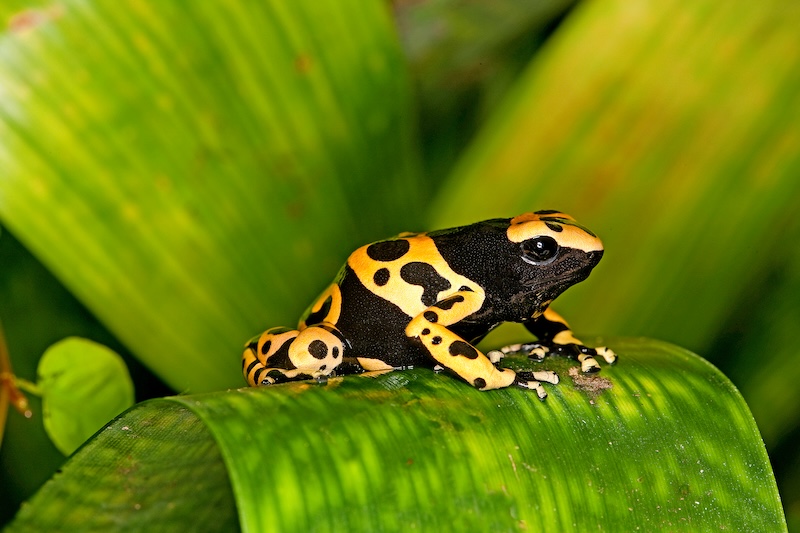
Poison dart frogs are known for their potent toxins, which in some species are secreted through the skin. The most toxic species, Phyllobates terribilis, produces a neurotoxin called batracotoxin. In the wild, the toxin can be so potent that even very small amounts can be lethal to predators.
Researchers believe that the frogs' toxicity is linked to their natural diet in the rainforest, where they eat ants, beetles, and other small arthropods, among other things. When the frogs are kept in controlled environments and fed a different diet, they do not develop the same toxicity.
The poison dart frogs at the Butterfly House are therefore not poisonous. They are fed a specially adapted diet—including Swedish-grown fruit flies—and lack the substances needed to produce the toxins. Despite their dramatic reputation, poison dart frogs are calm and cautious animals that prefer to stay among leaves, roots, and vegetation.
Small Creatures in Large Rainforests
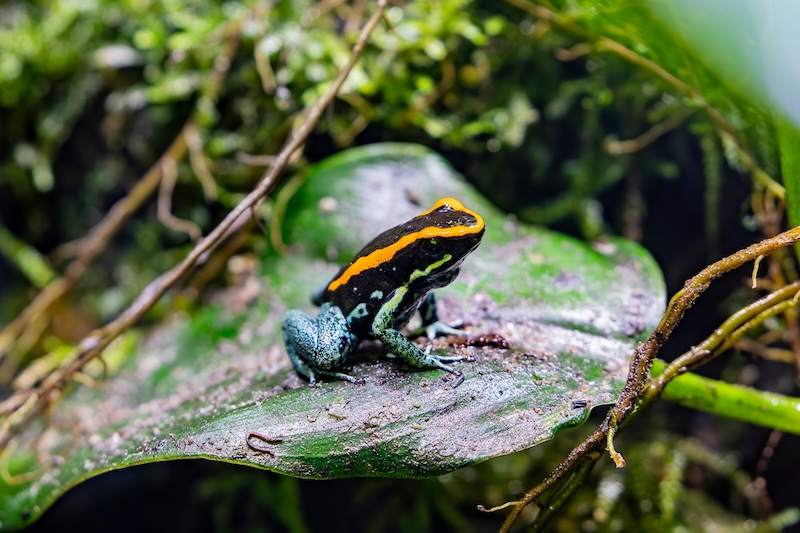
Poison dart frogs live primarily in the tropical rainforests of Central and South America. There, the warm and humid climate provides the perfect conditions for their survival.
Most species are active during the day and spend a great deal of time searching for food. Despite their small size, they play an important role in the ecosystem and contribute to the balance in some of the world’s most species-rich environments.
Discover the poison dart frogs at the Butterfly House
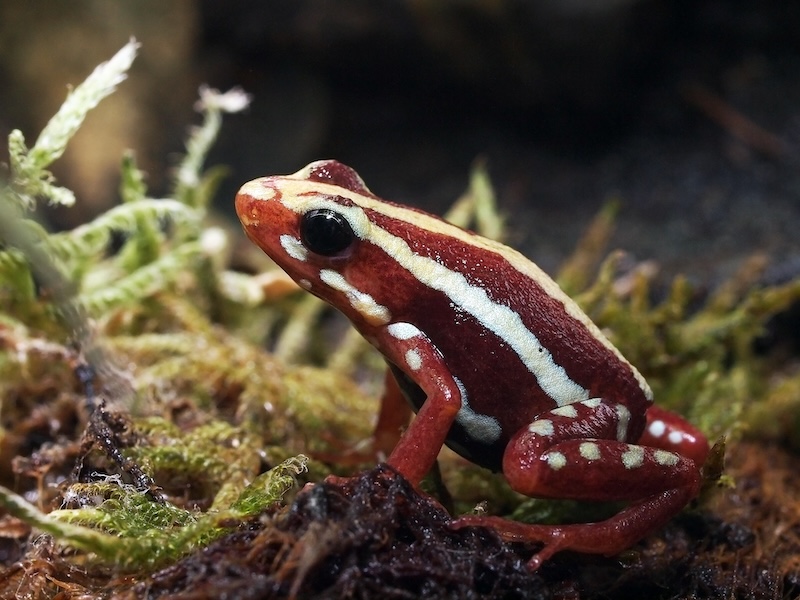
When you visit the Butterfly House, you’ll have the chance to get up close to some of the rainforest’s most colorful inhabitants. We have several different species, each with its own unique colors, patterns, and behaviors.
Among other things, you can see:
Some species are easy to spot right away thanks to their bright colors, while others blend in with the plants and require a little patience to find. The next time you visit the Butterfly House, keep your eyes peeled. Maybe one of these fascinating little frogs is hiding right in front of you.
August 20, 2026

